



Weeds aggressively steal water, sunlight, and vital nutrients from crops, slashing yields within just a few weeks if left unchecked. To stop this loss, every farmer eventually faces a critical question: what should they use between a power weeder and a cultivator. Also, which machine actually delivers better weed control?
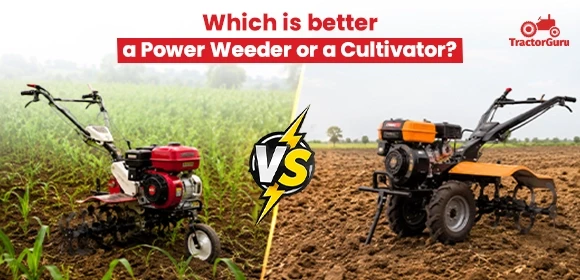
Both tools remove unwanted growth between crop rows, but they work in different ways and suit different farms. A cultivator is pulled behind a tractor and stirs the soil with tines. A power weeder runs on its own rotary blades, powered by the tractor's PTO or a small motor.
A power weeder is for clearing weeds around growing plants, while a cultivator is for digging deep into hard ground before you plant seeds.Think of a power weeder as a precise garden tool, and a cultivator as a heavy duty dirt breaker.
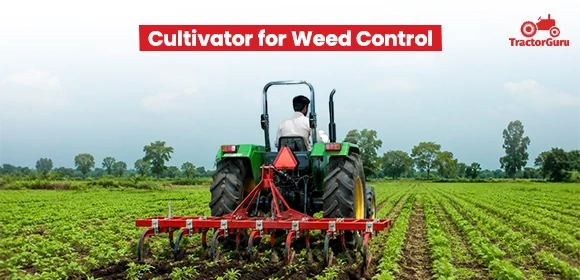
A cultivator is a tillage implement mounted on the tractor's three-point hitch. It carries a row of spring loaded or rigid tines that dig into the topsoil as the tractor moves forward. These tines loosen compacted ground and pull out young weeds by the root, without needing any separate power drive.
How is weed control achieved using a cultivator?
In simple terms, the tines physically break the weed's root system while stirring the soil between rows, so the plant dries out and dies within a day or two under the sun.
For which crops is a cultivator used?
Farmers commonly run it in wheat, cotton, sugarcane, maize, and pulses, where wide row spacing gives the tines room to pass through safely. Most cultivators need a tractor between 35 HP and 60 HP, that depends on the number of tines and working width.
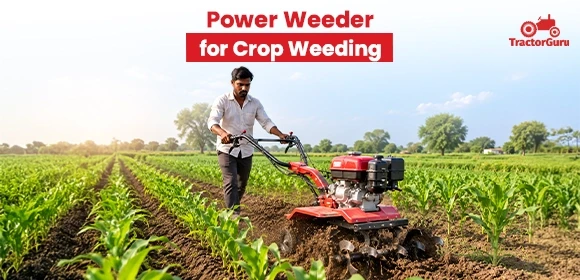
A power weeder is an active implement, not a passive one. Unlike a cultivator, it carries rotating blades or tines that spin using power drawn from the tractor's PTO shaft. This spinning action chops and uproots weeds close to the crop line, reaching spots a plain cultivator sometimes cannot.
For which crops is a power weeder used?
It works well in vegetables, groundnut, soybean, onion, and other closely spaced crops where precision matters more than raw width.
With what HP tractor is a power weeder operated?
Most power weeders on Indian farms run comfortably on tractors between 20 HP and 45 HP, which makes them a practical fit for small and mid-size holdings too.
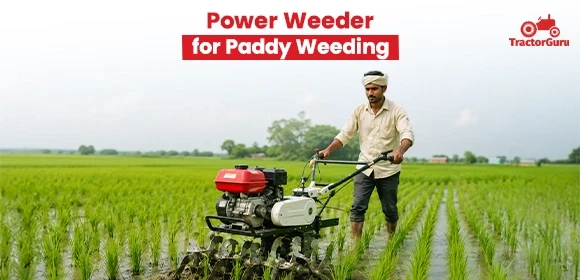
Paddy is one crop where weed control gets tricky, since fields stay flooded or waterlogged for weeks at a stretch.
For which crops is weeding done using a power weeder?
Paddy sits right at the top of that list, along with other row crops grown in wet soil.
Which implement is better for weed control in paddy?
A power weeder usually wins here, because its rotating blades cut through soft, muddy soil and clear weeds between transplanted rows without damaging young rice stalks.
A cultivator's rigid tines, on the other hand, can drag and uproot paddy seedlings in loose, water logged fields, so most paddy growers lean on the power weeder for this specific job.
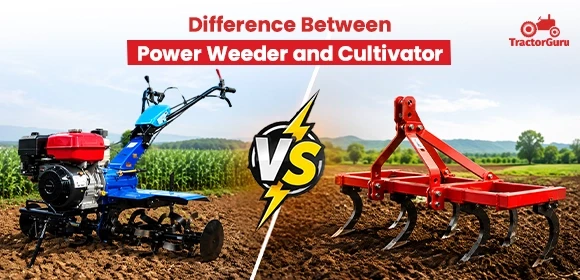
The difference between power weeder and cultivator really comes down to how each one attacks the weed problem. One drags through the soil, the other spins and chops. Here is a vertical comparison of the both implements:
|
Point of Difference |
Cultivator |
Power Weeder |
|
Working Method |
Static tines drag through soil |
Rotating blades actively cut and chop weeds |
|
Power Source |
Pulled by tractor, no separate drive |
Runs on tractor PTO or its own motor |
|
Ideal HP Range |
35 to 60 HP |
20 to 45 HP |
|
Best Suited Crops |
Wheat, cotton, sugarcane, maize |
Wet, muddy, or waterlogged fields |
|
Row Spacing Needed |
Wider row spacing |
Works in narrow, close spaced rows |
|
Soil Type |
Dry to semi-dry fields |
Wet, muddy, or waterlogged fields |
|
Cost Range |
Generally lower |
Slightly higher due to moving parts |
Which is better for weed control?
Honestly, it depends on what you're growing, your soil type, and how much you’re willing to spend. If you’re working with dry land crops like wheat, cotton, or maize, a cultivator works just fine—and it’s easier on your wallet, too. But if you’re dealing with tightly spaced or wet field crops like paddy, groundnut, or vegetables, a power weeder gets the job done better. It’s tidier and more accurate when it comes to weeding.
Which is better: a power weeder or a cultivator?
If your farm grows a mix of crops, many farmers end up owning both, using the cultivator for broad tillage linked weeding and the power weeder for narrow lanes. Which implement is better for weed control ultimately depends on matching the tool to the field, not picking one equipment for every season.
Power weeders and cultivators both have a spot on Indian farms, they just do different jobs. If you’re working dry fields with wide rows, a cultivator makes sense, plus it’s usually cheaper. However, if you’ve got wet soil, tightly spaced, or fragile crops like paddy, a power weeder gives you better control. Before you spend money on either one, check your tractor’s horsepower, what you’re growing, and how your fields look.
Website - TractorGuru.in
Instagram - TractorGuru Instagram Page
Facebook - TractorGuru Facebook Page


Sonalika Tractors' Mega Plan: 25-Acre Global R&D Center to be Built in UP


दूध के साथ गोबर-गौमूत्र से कमाई! नंदिनी योजना में ₹31 लाख तक अनुदान

Yamaha Strengthens Prospr with Smart Weed-Control Technology


UP Allots Land to 3 Firms for Tractor, Dry Fruit Units Near Yamuna Expressway


The top choice for farmers in India. Check prices and explore exclusive offers now!
Select Tractor