



A tractor doesn’t only run on diesel; it also needs engine oil, transmission oil, hydraulic fluid, coolant and a few smaller reservoirs. All of them work in the background to carry away heat, cut down friction and keep metal parts away from grinding against each other. Once these fluids age past their limit, they stop protecting the engine and start contributing to wear instead. That's really what tractor fluid change intervals are about: catching the fluid before it turns from protector to problem.
This blog walks through the fluids that matter most and includes a practical maintenance schedule chart you can keep handy. Some of the habits make preventative maintenance for farm tractors much less of a chore.
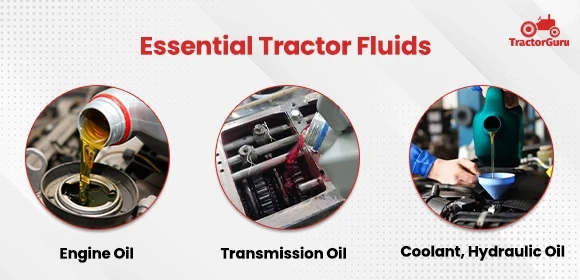
Before getting into hours and dates, it's worth knowing what each fluid is actually doing for the tractor:
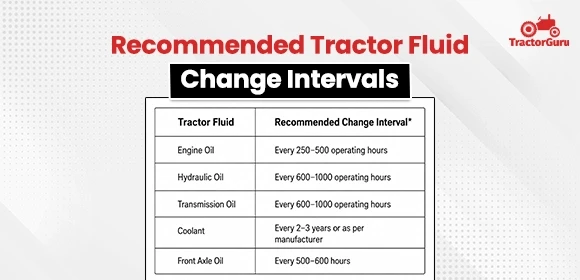
Every brand writes its own numbers into the owner's manual, and there's no single tractor maintenance schedule chart that fits every model on the market. Even so, most manufacturers suggests similar range.
For most of the 50 HP tractor oil change hours, 250 is the safer end of the range if the machine works in heavy dust or under continuous load. While the tractor that works lighter can use it, you can stretch it to 500 hours. John Deere's oil change schedule for several of its models follows a similar pattern. The first oil change is done earlier after the engine break-in period, and after that, the oil is changed at regular intervals.
Tractor hydraulic oil change frequency and tractor transmission fluid change interval are both different. Usually, between 600 and 1,000 hours, since these systems run cooler and pick up less contamination than the engine does. The symptoms of dirty tractor hydraulic oil include sluggish lift response, a burnt smell from the reservoir, & a milky tint that points to water getting in. Any of these refers to the time for changing the oil well before the hour count.
Front axle oil should generally be changed every 500 to 600 operating hours. The radiator coolant should also be replaced every 2 to 3 years to keep the cooling system clean and prevent rust. If you own multiple tractors, following the same service schedule for all of them makes maintenance and expense tracking much easier.
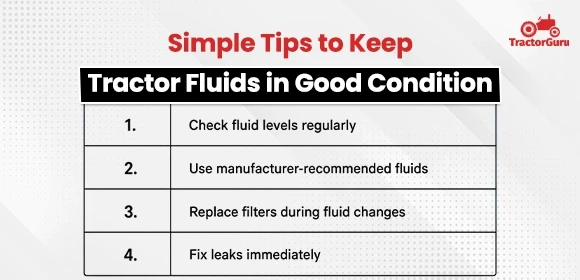
Along with following the fluid change intervals mentioned in the table above, regular air cleaner maintenance is also important. A dirty air cleaner makes the engine work harder and can increase oil consumption. If your tractor has an oil-bath (wet) air cleaner, clean out the old oil and dirt, then refill it with fresh oil up to the recommended level. It is a good idea to check the air cleaner whenever you change the engine oil.
Also, don't forget to lubricate important parts like grease points, linkage pins, and the PTO shaft at regular intervals. With a few basic tools, a clean drain pan, and the correct oil, most fluid changes and maintenance tasks can be done at home.
None of this is complicated once it becomes a habit. Engine oil, transmission oil, hydraulic fluid, coolant, front axle oil, and brake fluid each protect a different part of the tractor, and each wears out on its own timeline. Follow a simple tractor fluid maintenance schedule and adjust it based on how often you use your tractor. This can help avoid expensive services during the farming season. If the schedule and the owner's manual show different timings, always follow the owner's manual. If you don't have the manual, you can use the intervals mentioned here as a general guide.
Website - TractorGuru.in
Instagram - TractorGuru Instagram Page
Facebook - TractorGuru Facebook Page


ट्रैक्टर EMI कैलकुलेटर गाइड: ब्याज दर और मासिक किस्त की गणना कैसे करें

खेती के लिए परफेक्ट ट्रैक्टर खरीदते समय इन जरूरी फीचर्स पर ध्यान दें


Tractor Emission Norms in India: Everything a Farmer Should Know

सोलर ड्रायर पर 1.50 लाख रुपये तक की सब्सिडी, जानें आवेदन प्रक्रिया और पात्रता

Yamaha Strengthens Prospr with Smart Weed-Control Technology


UP Allots Land to 3 Firms for Tractor, Dry Fruit Units Near Yamuna Expressway

Select Tractor