The main difference between these two models are, Powertrac Euro 50 Next is a heavy-duty tractor with 52 HP & 434 Plus PowerHouse is a compact tractor with 39 HP.
The 52 HP model is suitable for rotavator and tough farm work. On the other hand, the 39 HP tractor is built for regular small- to medium size lands.
Farmers weighing a Euro 50 Next vs 434 Plus PowerHouse comparison are usually choosing between a mid-size and a bigger, more powerful tractor from the same brand. Both of them are built for different scales of farming.
Powertrac Euro 50 Next vs Powertrac 434 Plus PowerHouse Tractor: Key Differences
Check out the differences in specifications between Powertrac Euro 50 Next and Powertrac 434 Plus PowerHouse. Also, find out which tractor is best for which type of land.
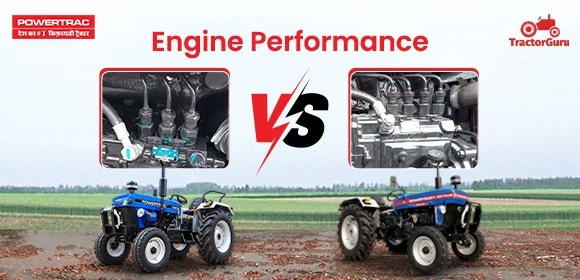
Engine Performance
- The 434 Plus PowerHouse runs a 39 HP engine with a 2339 CC, 3-cylinder block, delivering 31 PTO HP.
- The Euro 50 Next steps up to 52 HP from a 2932 CC engine, with 46 PTO HP. That gap in PTO power decides a lot of what each tractor can pull.
- On the fuel side, the Powertrac 434 Plus PowerHouse mileage per hour on cultivator stays efficient. Similarly, Powertrac 434 PowerHouse diesel consumption per acre with seed drill stays low, since seed drilling is light-draft work.
- The Powertrac 434 is always at the top of fuel efficiency searches. Its engine, which runs at 35 HP to 39 HP, is made right for everyday land preparation. It saves fuel that a 50 HP tractor would waste.
- When doing light tilling, cultivation or haulage, a big engine uses much diesel just to stay on. The smaller Powertrac 434 engine runs at its best & uses fuel wisely.
| Specification |
Powertrac Euro 50 Next |
Powertrac 434 Plus PowerHouse |
| HP Category |
52 HP |
39 HP |
| Engine Capacity |
2932 CC |
2339 CC |
| Engine Rated RPM |
2000 |
2000 |
| Max Torque |
225 |
| No of Cylinder |
3 |
3 |
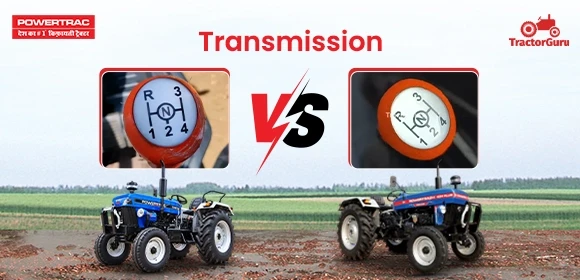
Transmission
- The 434 Plus PowerHouse comes with an 8 Forward + 2 Reverse gearbox, while the Euro 50 Next offers 12F + 3R. This is one of the clearest Powertrac Euro 50 Next gearbox advantages.
- More gear steps mean finer control over speed, whether you're crawling behind a cultivator or moving faster for road haulage.
- That finer gear spacing also answers the question of which is the tractor with best ABC gear speed for precise seasonal sowing. Successful planting depends entirely on a steady, repeatable speed to guarantee uniform seed spacing from row to row.
- The 434 has a gear set with fewer speeds, which makes the 434 hard to pick the right speed on uneven ground. On the other hand, the Euro 50 Next has a range of gear options.
| Specification |
Powertrac Euro 50 Next |
Powertrac 434 Plus PowerHouse |
| Clutch Type |
Double / Dual clutch |
Single / Dual |
| Transmission Type |
Constant Mesh |
N/A |
| Gear Level Position |
Side Shift |
Center Shift |
| Rear Axle |
Helical Bull Gear Reduction |
Inboard Reduction |
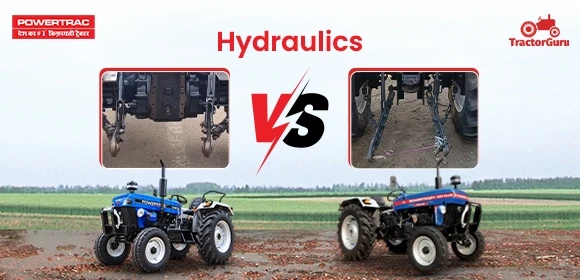
Hydraulics
- Lifting capacity is where the two tractors separate the most. The Powertrac Euro 50 Next lifting capacity vs 434 PowerHouse is 2000 kg against 1600 kg, respectively.
- For light implements, this difference barely matters, but once you're running an automatic potato planter and digger operations. The extra 400 kg on the Euro 50 Next makes lifting and turning at the headland noticeably easier.
- Tractor & Implement Matching: A 6-foot rotavator sits comfortably within the 434 Plus PowerHouse's power band on lighter Rabi soil. In contrast, a 7-foot rotavator demands the higher torque of the Euro 50 Next once winter soil firms up.
- Real-World Capability: The 434 Plus is far from underpowered, effortlessly handling a 2-bottom MB plough on medium soil without straining the engine.
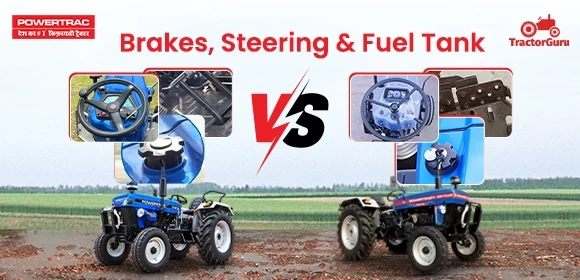
Brakes, Steering & Fuel Tank
- Both tractors use oil-immersed disc brakes for frequent stopping in field and road conditions. Furthermore, both come with power steering options for easier handling over long working hours.
- The main practical difference is fuel tank size, 50 litres on the 434 Plus PowerHouse against 60 litres on the Euro 50 Next. This capacity of the fuel tank matters if you're running long haulage days without a refuel stop.
- The Euro 50 Next is also available in a 4WD version, and this changes things for wet or soft fields. In a Powertrac Euro 50 Next 4WD vs 434 PowerHouse 2WD for wet soil cultivation comparison.
- The 4WD's front-axle grip actively cuts down wheel slippage on soft or waterlogged patches where a 2WD setup tends to spin and struggle. This identical traction advantage proves critical during sugarcane harvest haulage, where moving heavily loaded trolleys out of soft, uneven cane-field paths.
Price
On price, the Powertrac 434 PowerHouse vs Euro 50 Next price gap runs close to two lakh rupees.
- The 434 Plus PowerHouse sits between Rs. 5.97 and 6.20 lakh (ex-showroom).
- The Euro 50 Next starts around Rs. 7.94 lakh and goes up to Rs. 8.23 lakh (the 4WD variant runs higher still, close to Rs. 8-9 lakh).
Both carry a 5000-hour or 5-year warranty, so there's no gap there.
Conclusion
- For managing 3 to 20 acres of farming land with light-to-medium work like ploughing, sowing, and occasional haulage. The Powertrac 434 Plus PowerHouse gets the job done at a much lower operating cost. If your focus sits specifically in the 5 to 7 acres mustard and wheat farming bracket, both tractors handle the workload easily. However, the 434 excels at keeping your daily running expenses down.
- Once your implements get heavier, your fields get wetter, or your operations push closer to the 15–20 acre mark, the Farmtrac Euro 50 Next proves its worth. The model earns its premium price through superior PTO power, heavier lift capacity, and unmatched traction.
- Ultimately, there is no wrong choice here; it is simply a matter of matching the tractor's capabilities to what your land actually demands.
Website - TractorGuru.in
Instagram - TractorGuru Instagram Page
Facebook - TractorGuru Facebook Page