


How AI Tools Are Transforming Kharif Crop Planning in India?
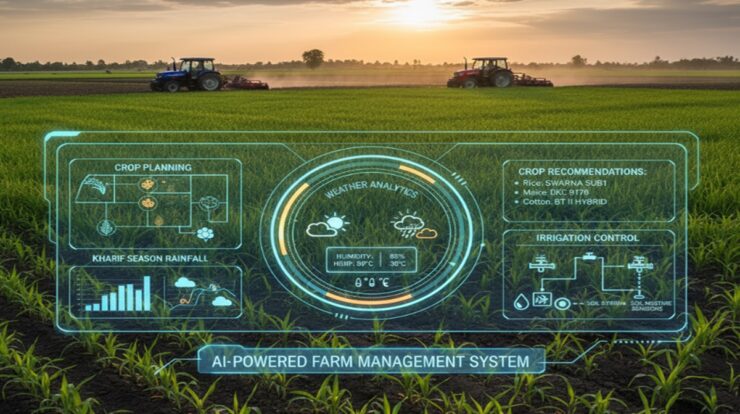


Kharif Crop farming in India is becoming more challenging each year due to unpredictable weather, rising input costs, and changing soil conditions. These factors have made it difficult for farmers to rely solely on traditional methods.
As a result, Artificial Intelligence (AI) is stepping in to help farmers make smarter decisions. From selecting the right crop and predicting rainfall to managing fertilisers and reducing crop loss, AI tools are transforming how farmers plan for the Kharif season. These tools also guide irrigation, detect pests early, and provide real-time market updates.
In this blog, you’ll explore how AI in Indian agriculture is being used at every stage from pre-sowing to post-harvest. You’ll also see how it works in conjunction with modern tractors, drones, and smart tools to enhance yield and profitability.
AI Helps Farmers Choose the Right Crop
Selecting an appropriate crop is the most critical decision during any season. Farmers used to rely on experience and local guidance in the past. Now, crop recommendation platforms based on AI provide evidence-based crop suggestions.
These technologies use satellite images, precipitation patterns, temperature data, and past yield information to suggest the best crop for a particular area. For instance, in regions with sandy soil and poor water supply, bajra is usually prescribed as a substitute for paddy.
This makes Kharif crop planning more enlightened and less risky to fail. Compact tractors with seed drills and tillers facilitate this decision-making by rapidly preparing the soil for planting.
Is Weather Forecasting Improved with AI?
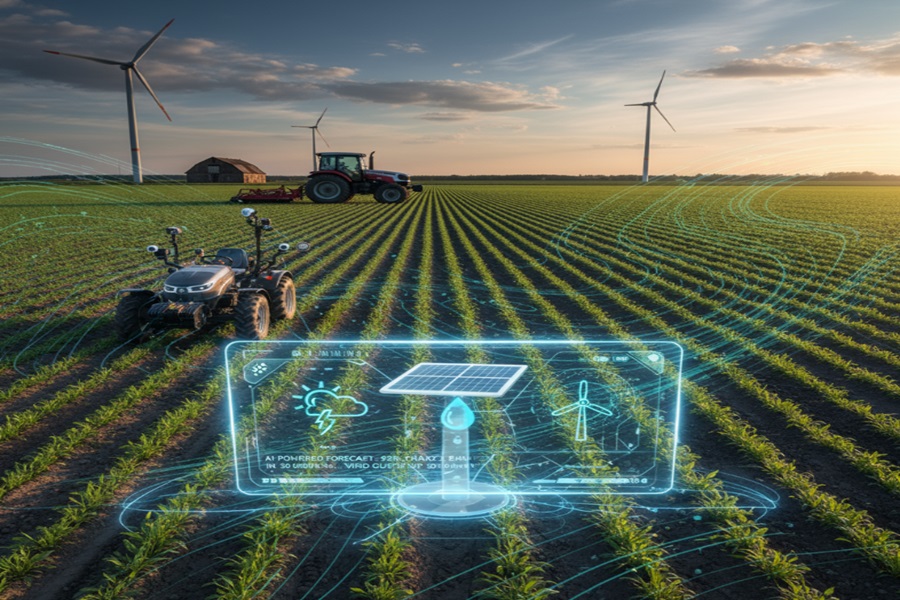
Indian farmers have always faced uncertain weather. Late rains or abrupt droughts frequently upset farm schedules and crop patterns. With weather forecasting based on AI, farmers get precise reports of rainfall, temperature, and humidity.
They are alerted via mobile regarding impending rain or dry spells, and this helps them schedule their work accordingly. For example, in case of a 3-day dry spell, farmers can take advantage of the time to plant seeds and irrigate fields through fuel-efficient tractors. Additionally equipped with multi-speed PTOs and adjustable hydraulics, these machines provide quicker and more accurate operations.
Smart Farming with AI and New Tractors
Once crop planning and weather evaluation are done, the actual farmwork starts. New tractors are necessary equipment for the implementation of AI-based strategies. The tractors available today include GPS compatibility, precision sow tools, and depth controls. These tools guarantee precise seed placement, minimize errors, and increase efficiency.
In the states of Maharashtra and Karnataka, farmers are applying this combination of smart machinery and AI to harvest crops such as cotton and soybeans more precisely and using fewer gallons of fuel.
AI Improves Crop Health Monitoring

AI continues to be an important part even after planting. AI-driven drones are employed to survey fields and take high-resolution images of crops growing in the fields. They are then analyzed to identify early signs of disease, pests infestation, or nutrient deficiency.
At the same time, in-field sensors monitor soil moisture and temperature. On that basis, the system advises fertiliser or pesticide application, which is applied by tractors with boom sprayers or front-mounted applicators. This ensures optimal input usage, reduces costs, and encourages better plant health.
Precision Irrigation and Use of Fertilisers
Indian agriculture needs water efficiency. Excess uses the resource unnecessarily, while less than that ruins the crop. AI-powered irrigation tools ensure this balance.
Soil sensors connected with AI systems calculate the precise amount and timing of irrigation required. Certain systems even automate pumps, allowing watering at the right time without human intervention.
AI facilitates fertiliser planning too by analyzing soil nutrition and crop development. Suggested applications are implemented with tractor-mounted spreaders for consistent application.
AI Helps Reduce Post-Harvest Losses
AI does not end with cultivation—it extends to enhancing what takes place after the harvest. Post-harvest losses are still a huge issue, particularly with perishable products.
AI platforms offer real-time market insights with their tracking of demand, price movements, and active buyers. Farmers use this information to choose when and where to sell—be it in local mandis, via cold storage, or after holding out for a superior price window.
With tractors designed for heavy haulage, farmers can haul produce economically to markets, minimizing spoilage and maximizing overall profit.
Is AI Really Helping Farmers in Kharif Season?
There’s a lot of hype regarding Artificial Intelligence (AI) revolutionizing Indian farming, particularly during the Kharif season. But though AI solutions guarantee intelligent crop planning, disease identification, and improved irrigation, is the technology really making it to our farmers?
Let’s have a closer look at what’s actually going on on the ground.
1. Low Digital Awareness: The vast majority of small and marginal farmers (who constitute more than 85% of the total) are not aware of how AI works. They still believe in traditional ways and peer advice rather than data-based platforms.
2. Inadequate Internet Connectivity: Most AI technologies rely on good internet and smartphones. Rural connectivity is however poor, hindering the utilization of AI apps, dashboards, and auto-alerts.
3. Affordability: Smart sensors, drones, and precision equipment are still prohibitive for small farmers. In the absence of government subsidies or credit facilities, these are beyond reach.
4. Sparse Local Data: AI requires precise local data to make intelligent suggestions. In most regions, the data is either stale or does not exist, which reduces the effectiveness of the tool.
5. Language Problems: The majority of apps and tools are in English or Hindi. Most farmers in Tamil Nadu, Odisha, or the Northeast struggle due to language restrictions.
6. Resistance to Change: AI recommendations may appear complex or risky. Farmers older than this are especially opposed to relying on new systems, even if they’re beneficial.
7. Fragmented Fields: AI works well with large, contiguous fields. Yet in India, farms are mostly small and fragmented, decreasing the effect of precision-based solutions.
Conclusion
AI in Indian agriculture is no longer something for the future; it’s already here, and it’s assisting farmers at every step of Kharif crop planning. From better sowing choices to timely spraying, watering, and post-harvest planning, AI is providing farmers with more options than ever before.
When coupled with suitable tractor technology and farm equipment, AI has the potential to increase farm productivity, sustainability, and profitability. With rural India becoming increasingly connected, these technologies will have an important part to play in shaping the future of Indian agriculture.