


Types of Farming in India: Traditional, Modern, & Advance
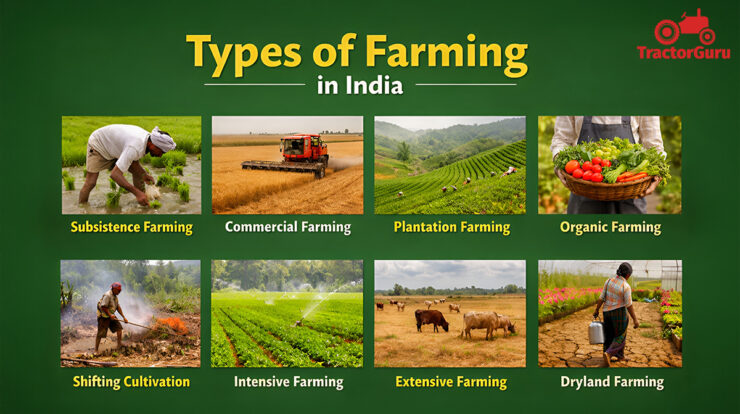


India has a rich agricultural background and types of farming practices across the country. The main reason for this diversity is different soil conditions, terrain, season, land, and availability of water. Over the years, farmers have adopted multiple farming methods to improve productivity and meet market demand.
In the past, farmers were engaged in subsistence farming. However, with the advancement of technology, farmers are shifting mainly to commercial farming. Apart from these two types of farming, farmers have adopted other farming methods too.
12 Types of Farming in India: Methods & Factors
In this blog, we will discuss the top 12 types of farming in agriculture in India, distinguish between traditional, modern, and advance farming. Also, what types of crops and inputs are used for these types of farming?
Traditional Farming
Traditional farming refers to the type of farming that involves the old agricultural practices that rely on natural resources. Read more about the types of traditional farming below:
1. Subsistence Farming
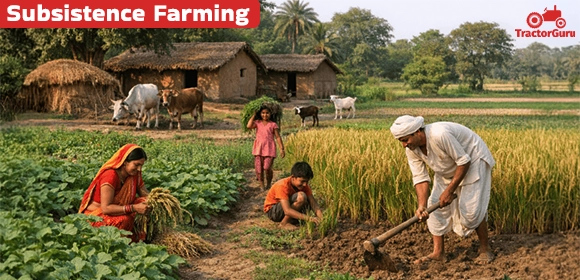
This is one of the traditional farming methods that was largely practiced in India. In this farming, farmers only grow the crops for their own use. In other terms, subsistence farming only concentrates on self-sufficiency. This agricultural method relies heavily on family labor and traditional tools.
Some of the crops that are grown in subsistence farming are rice (especially in wet areas), maize, millets (like jowar, bajra), wheat, pulses, potatoes, etc. This method gives complete food security to the farmers’ families. However, it is restricted to the market exposure. Resulting, the production will not give income to the farmers.
2. Intensive Farming
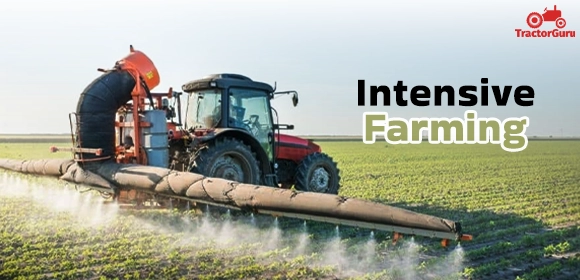
Intensive farming, as the name suggests, refers to a method that includes more inputs and efforts in cultivation. In this form of farming, farmers use a high amount of labor, fertilizers, and water on a small piece of land. The primary goal of intensive farming is to achieve a maximum output per acre.
This type of farming is largely practiced in the densely populated areas, where land availability is limited. The names of some of the crops that are grown in this farming are as follows: rice, wheat, maize, sugarcane, and cotton.
3. Extensive Farming
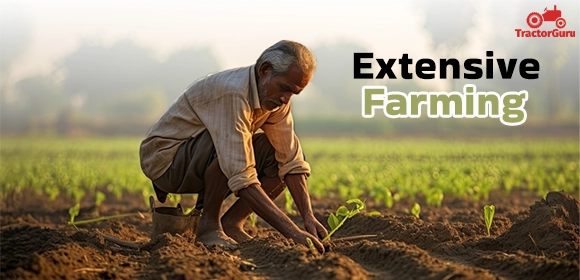
Extensive farming requires a large area of land, with fewer inputs. This farming depends more on natural soil fertility and rainfall. The production led by extensive farming per acre can be less. However, the overall productivity can be high because of a large area under cultivation.
This type of farming is mainly practiced in states like Punjab, Haryana, and parts of Uttar Pradesh. In addition, the names of crops grown in extensive farming are wheat, rice, maize, millets (such as jowar, bajra, ragi), pulses, and oilseeds.
4. Mixed Farming
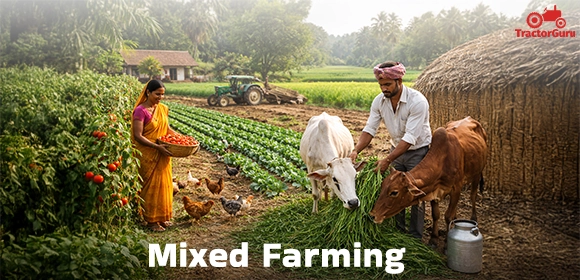
Mixed farming is a combination of crop cultivation and livestock rearing. In this type of farming, farmers perform both of these tasks simultaneously. This helps the growers to sustain their lives and enhance sustainability. The types of cattle that are common in mixed farming are cows, goats, and poultry.
This method provides multiple sources of income and reduces the risk of crop failure. Even if a farmer faces crop failure, they can rely on income from cattle rearing.
5. Dryland Farming
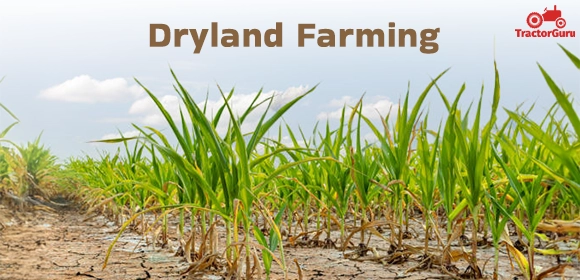
Dryland farming is mainly exercised on the areas with low rainfall density. In this farming method, farmers select the land that is suitable for growing drought-resistant crops. This type of farming depends largely on the moisture present in the soil. The crops that are mainly grown in dryland are millets, pulses, and oilseeds.
Water conservation techniques such as rainwater harvesting and soil moisture management play an important role in this type of farming.
6. Wetland Farming
Wetland farming justifies its name, and can be performed only in areas with abundant water.
It is a complete contrast to dryland farming; it requires high rainfall or proper irrigation systems. Wetland crops provide high productivity where water is not a limiting factor.
The names of some of the crops that are majorly grown in wetland farming are rice (paddy), cranberries, taro, lotus root, water chestnut, etc.
7. Terrace Farming
Terrace farming is practiced in hilly and mountainous land. In this method, land is cut into step-like terraces along the slopes. Also, the process of cutting the land helps in preventing soil erosion and conserving water.
The names of the states that practice terrace farming are Uttarakhand, Himachal Pradesh, Nagaland, Arunachal Pradesh, Sikkim, Jammu and Kashmir, etc.
Modern Farming
Modern farming involves the use of modern equipment, irrigation systems, fertilizers, and high-yield seeds. Read about the types of commercial farming in the points below:
8. Commercial Farming
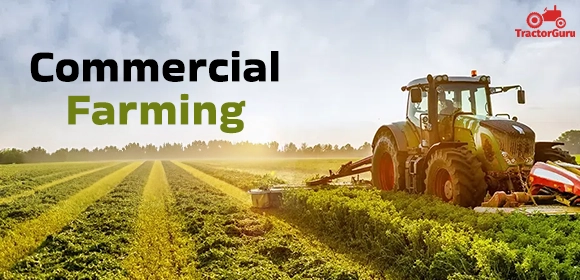
Commercial farming is the complete opposite of subsistence farming. The goal of this farming is to achieve maximum profit. It emphasis more on the production, and fulfilling the requirements of the market. Additionally, in commercial farming, the lands need more inputs, such as modern machinery, high-quality seeds, fertilizers, and irrigation systems.
The crops grown in commercial farming are called cash crops. The names of some of them are cotton, sugarcane, and oilseeds. Conclusively, this farming focuses on producing crops for sale
9. Plantation Farming
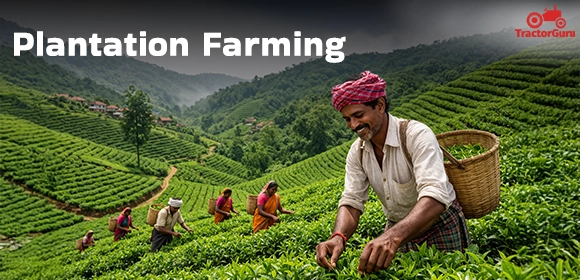
Plantation farming includes growing a single crop over a large area of land. This farming requires proper planning, investment, and management. For planting the crops, farmers need to plough and make the rows in the land with the use of farm tractors and other equipment.
The crops that are mainly grown in plantation farming are tropical beverages (tea, coffee, cocoa), industrial materials (rubber, cotton, sisal, jute), edible oils (oil palm, coconut), etc.
10. Organic Farming
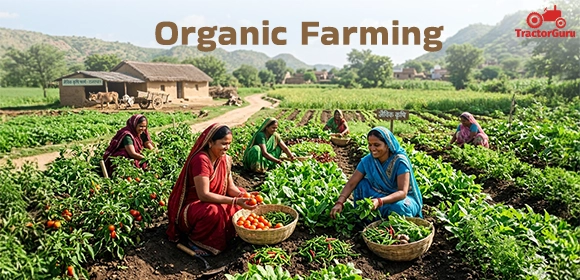
Organic farming focuses on cultivation without chemical fertilizers. Instead, to grow organic crops, farmers use compost, bio-manure, and natural pest control. This method is environment friendly and protects the soil’s condition throughout the seasons. Also, in recent times, organic farming is in high demand in the market.
Almost any crop can be grown under organic farming. The names of some of them are organic cotton, oilseeds (soybean, sesame), fiber crops, sugarcane, cereals, millets, fruits, etc
Advanced Farming
Advanced farming refers to modern agricultural practices that use cutting-edge technologies like automation, sensors, and data-driven tools. Learn about the types of advanced farming:
11. Precision Farming
Precision farming is an advanced farming approach that uses technology to monitor and manage crops more efficiently. It is an essential part of Precision Agriculture 2026, which takes the help of an AI to make farming decisions.
Some of the tools that are helpful in precision farming are GPS, sensors, data analytics, and AI. This type of technological integration in farming is new for Indian farmers. Thus, currently, it is not practiced on a large scale.
12. Vertical Farming & Hydroponics
Vertical farming & Hydroponics is a new type of farming technique that is getting popular in recent times. In this farming, crops are grown in a controlled environment, often without soil. In vertical farming, crops are cultivated in stacked layers. This makes these layers efficient use of limited space, especially in urban areas.
On the other hand, Hydroponics, on the other hand, uses nutrient-rich water solutions instead of soil to grow plants. This type of farming is ideal for leafy vegetables, herbs, and high-value crops.
Conclusion
Conclusively, the diversity of farming methods in India, from traditional practices to modern and advanced techniques, reflects the evolving nature of agriculture in India. Farmers today are not only focusing on increasing production but also on improving efficiency and profitability.
The growing adoption of AI in agriculture in India aims to help farmers with better decisions related to crop health and production.
By understanding and gaining knowledge of all these 12 types of farming in India, farmers can make better decisions. Additionally, they can also evaluate which type of farming method is best for them. It will result in improve productivity and increase their overall income.